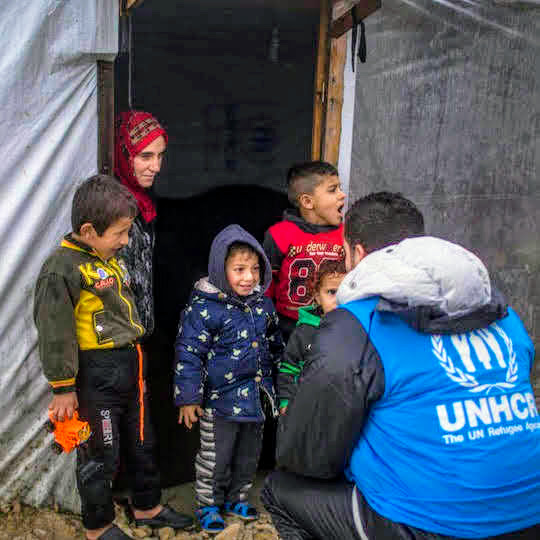
Vulnerability Assessment of Syrian Refugees in Arsaal - 2019
Country
Name
Country code
Lebanon
LBN
Abstract
The Vulnerability Assessment for Syrian Refugees in Lebanon Arsaal, was conducted jointly by the United Nations Children’s Fund (UNICEF), United Nations High Commissioner for Refugees (UNHCR) and the United Nations World Food Programme (WFP, dataviz.vam.wfp.org). Now in its seventh year, the Vulnerability Assessment of Syrian Refugees in Lebanon (VASyR) assesses a representative sample of Syrian refugee families to identify changes and trends in their situation. The Government of Lebanon estimates that the country hosts 1.5 million of the 6.7 million Syrians who have fled the conflict since 2011 (including nearly one million registered with UNHCR as of end of September 2019). VASyR Arsaal is an addition to the 2019 VASyR, containing a representative sample of Syrian Refugee households in Arsaal.
Kind of Data
Sample survey data [ssd]
Unit of Analysis
Household and individual
Version
Version Description
v 2.1: Edited, cleaned and anonymised data.
Scope
Notes
The scope includes:
- key indicators on household demographics
- safety and security
- accomodation
- health
- food security
- livelihoods
- expenditures
- food consumption
- debt
- coping strategies and assistance
- intention to return
- education
Topics
Topic
Food security
Livelihood & Social cohesion
Basic Needs
Coverage
Geographic Coverage
Arsaal
Universe
The sampling frame used for VASyR 2019 was the total number of Syrian refugees in Arsaal known to UNHCR.
Producers and sponsors
Primary investigators
Name
UNHCR
WFP
UNICEF
Sampling
Sampling Procedure
The sample includes 328 Syrian refugee households, and aims to be representative of the Syrian refugee families in Arsaal. A two-stage cluster approach was adpoted using the sampling frame of the total number of Syrian refugees known to UNHCR. Using the “30x7” two stage cluster scheme, originally developed by the World Health Organization, 30 clusters per geographical area and seven households per cluster are used to provide a precision of +/- 10 percentage points. Arsaal was selected due to its specific situation which differs from other refugee hosting communities.
Data Collection
Dates of Data Collection
Start
End
2019-03-08
2019-05-03
Data Collection Mode
Face-to-face [f2f]
Data Collectors
Name
World Vision International
Questionnaires
Questionnaires
The questionnaire included key information on household demographics, arrival profile, registration, protection, shelter, WASH, assets, health, education, security, livelihoods, expenditures, food consumption, coping strategies, debts and assistance, as well as infant and young feeding practices.
Data Processing
Data Editing
After the completion of data collection, raw data was shared with the VASyR Core Group to review inconsistencies and mistakes that could not be identified during the collection phase. Some of these errors required calling households back to validate and correct the data collected. Each agency was asked to provide the team in charge of clean-up with a list of identified issues and recommendations on how to proceed with the clean-up. A copy of the original raw data was saved. Any modification to the data was scripted in SQL providing a step by step audit trail from the raw data leading to the final dataset used for analysis
Access policy
Contacts
Name
Affiliation
Email
Curation team
UNHCR
microdata@unhcr.org
Citation requirements
UNHCR, WFP, UNICEF (2019) Vulnerability Assessment of Syrian Refugees in Lebanon, Arsaal addition, UNHCR microdata library, https://microdata.unhcr.org